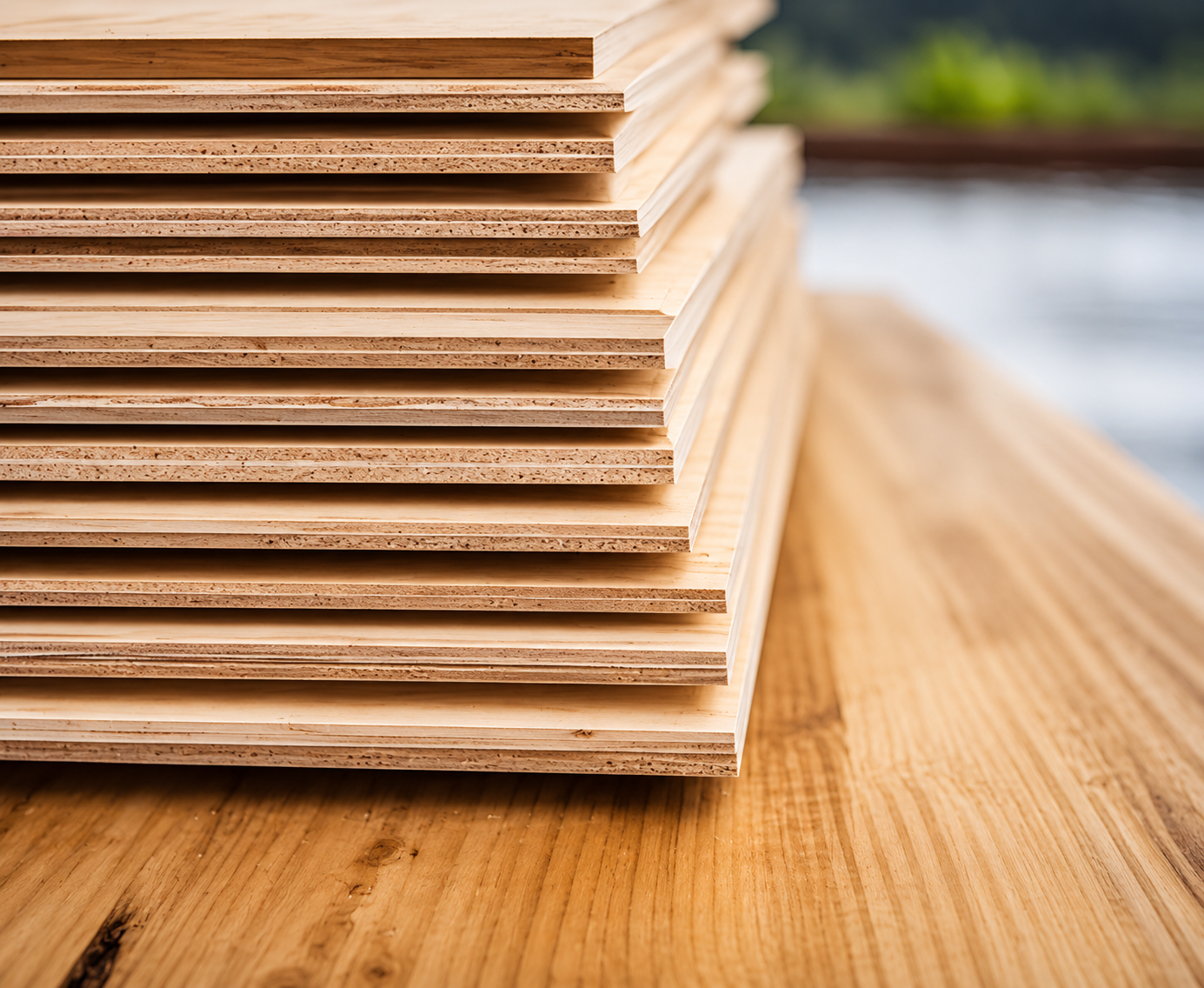
The difference between marine and commercial plywood is not marketing. It is chemistry, density, and pressing pressure — three quiet decisions made inside a factory that determine whether your kitchen survives a decade or starts swelling in a year.
The Adhesive Tells The Truth
Marine plywood is bonded with BWP phenol-formaldehyde resin — the same family of adhesives engineered for boat hulls. Commercial plywood uses MR-grade urea-formaldehyde, which is designed for dry, interior, low-humidity use. One survives steam. The other dissolves into it.
Core Construction
Marine cores are denser, with fewer voids, calibrated thickness, and hardwood species chosen for moisture resistance. Commercial cores are softer, faster to mill, lighter on the wallet — and that is exactly where the warping begins.
“If it touches water, vapour, or steam — it is not a place for commercial ply.”
The Plymaarque Perspective
Every material we curate is chosen for one reason — to help architects, designers and homeowners build interiors that endure. Trends fade. Specification choices, made well, become the quiet luxury that defines a home for decades.
“Luxury is not what you add at the end. It is what you specify at the beginning.”
— Plymaarque Atelier


Conversation
Loading…